 Capichino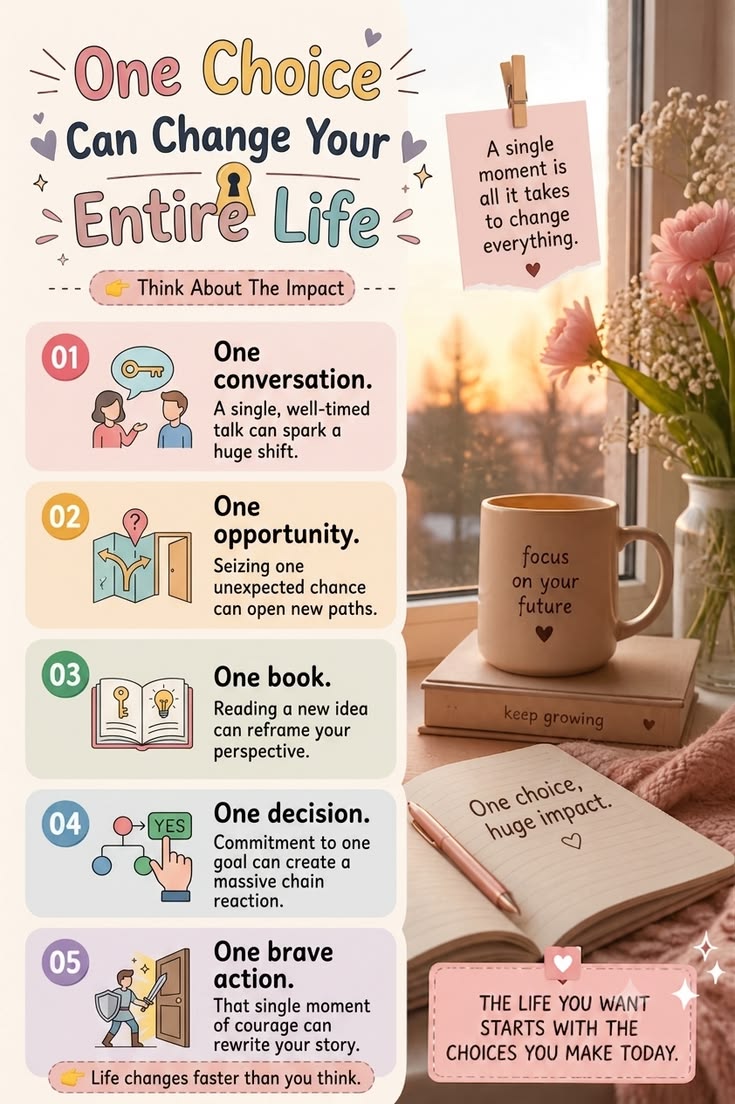
Every day, we make hundreds of decisions. Some are important, like choosing a career or moving to a new place. Others seem almost meaningless—what to eat, whether to exercise, when to check our phone, or whether to spend another ten minutes watching videos.
Imagine waking up every morning and reading for just ten minutes. One day doesn't seem significant. But after a year, you've spent more than 60 hours reading. The same principle works in the opposite direction. Ten minutes of unnecessary scrolling may feel harmless, but repeated every day, it can consume dozens of hours each year. Our lives are not shaped only by major decisions. They are also built from thousands of tiny choices.
A habit reduces the amount of thinking required to perform an action. When something becomes a habit, we don't need to constantly convince ourselves to do it. We simply do it. This is why changing our environment can sometimes be more effective than relying entirely on motivation. If you want to read more, keep a book where you normally keep your phone. If you want to exercise in the morning, prepare your clothes the night before. Make the desired action easier.
Modern technology has made instant entertainment incredibly easy. A few seconds can take us from boredom to videos, games, social media, news, or endless recommendations. The problem isn't that entertainment is bad. The problem is that our brains naturally prefer immediate rewards. Learning a new skill might take months. Watching a short video takes seconds. That difference can make meaningful activities feel unnecessarily difficult.
Boredom isn't always something that needs to be eliminated. Some of our best ideas appear when we aren't constantly consuming information. Walking without headphones, sitting quietly, looking out of a window, or simply allowing the mind to wander can create space for thoughts that normally get buried beneath constant stimulation. Sometimes, doing nothing is not wasting time. It is giving your mind room to think.
Small improvements become powerful when they continue for a long time. You don't need to completely transform your life tomorrow. You can start with something small: Read a few pages. Walk for fifteen minutes. Learn one new concept. Write down one idea. Spend less time on unnecessary distractions. Sleep a little earlier. None of these actions seems extraordinary. But consistency can turn ordinary actions into extraordinary results.
We often imagine our future as something that suddenly arrives. But the future is being created quietly through what we do today. The skills we practice, the people we spend time with, the information we consume, the habits we develop, and the decisions we repeat all influence the person we eventually become. You don't have to control everything. Just pay attention to the small things you can control.
Comments
Be the first to reply
No comments yet
Start the conversation below the prompt.